
1110. Delete Nodes And Return Forest 删点成林
- 作者: 负雪明烛
- id: fuxuemingzhu
- 个人博客:https://fuxuemingzhu.cn/
题目地址:https://leetcode.com/problems/delete-nodes-and-return-forest/
Given the root of a binary tree, each node in the tree has a distinct value.
After deleting all nodes with a value in to_delete, we are left with a forest (a disjoint union of trees).
Return the roots of the trees in the remaining forest. You may return the result in any order.
Example 1:
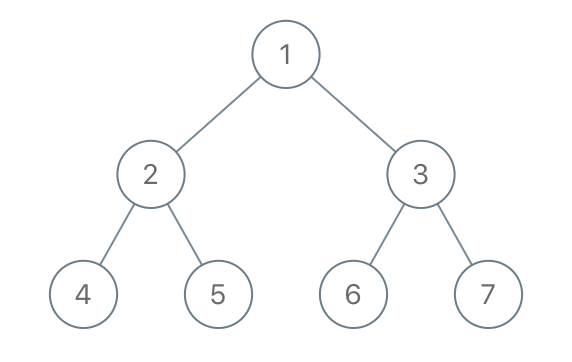
Input: root = [1,2,3,4,5,6,7], to_delete = [3,5]Output: [[1,2,null,4],[6],[7]]Constraints:
- The number of nodes in the given tree is at most 1000.
- Each node has a distinct value between 1 and 1000.
to_delete.length <= 1000to_deletecontains distinct values between 1 and 1000.
删除一棵二叉树中的所有值出现在to_delete中的节点。
参考了lee215大神的答案。看到二叉树的题就想到递归呀!
一个节点被删除时有以下几个情况:
- 如果该节点是根节点,形成左右两个子树,此时递归左右子树。
- 如果该节点不是根节点,那么需要修改其父节点指向自己的指针为空,并且递归左右子树。
一个节点一旦被删除,那么其左右孩子就是新的树的根节点。 如果一个节点是根节点,并且不被删除的情况下,才会放入结果中。
C++代码如下:
/** * Definition for a binary tree node. * struct TreeNode { * int val; * TreeNode *left; * TreeNode *right; * TreeNode(int x) : val(x), left(NULL), right(NULL) {} * }; */class Solution {public: vector<TreeNode*> delNodes(TreeNode* root, vector<int>& to_delete) { vector<TreeNode*> res; helper(root, true, res, to_delete); return res; } void helper(TreeNode*& node, bool isRoot, vector<TreeNode*>& res, vector<int>& to_delete) { if (!node) return; bool isDel = delCurNode(node, to_delete); helper(node->left, isDel, res, to_delete); helper(node->right, isDel, res, to_delete); if (isRoot && !isDel) { res.push_back(node); } if (!isRoot && isDel) { node = nullptr; } } bool delCurNode(TreeNode* root, vector<int>& to_delete) { for (int val : to_delete) { if (root->val == val) { return true; } } return false; }};2019 年 9 月 27 日 —— 昨天面快手,竟然是纯刷题
评论与交流