
987. Vertical Order Traversal of a Binary Tree 二叉树的垂序遍历
作者: 负雪明烛 id: fuxuemingzhu 个人博客: https://fuxuemingzhu.cn/
题目地址:https://leetcode.com/problems/vertical-order-traversal-of-a-binary-tree/
Given a binary tree, return the vertical order traversal of its nodes values.
For each node at position (X, Y), its left and right children respectively will be at positions (X-1, Y-1) and (X+1, Y-1).
Running a vertical line from X = -infinity to X = +infinity, whenever the vertical line touches some nodes, we report the values of the nodes in order from top to bottom (decreasing Y coordinates).
If two nodes have the same position, then the value of the node that is reported first is the value that is smaller.
Return an list of non-empty reports in order of X coordinate. Every report will have a list of values of nodes.
Example 1:
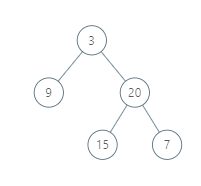
Input: [3,9,20,null,null,15,7]Output: [[9],[3,15],[20],[7]]Explanation:Without loss of generality, we can assume the root node is at position (0, 0):Then, the node with value 9 occurs at position (-1, -1);The nodes with values 3 and 15 occur at positions (0, 0) and (0, -2);The node with value 20 occurs at position (1, -1);The node with value 7 occurs at position (2, -2).Example 2:
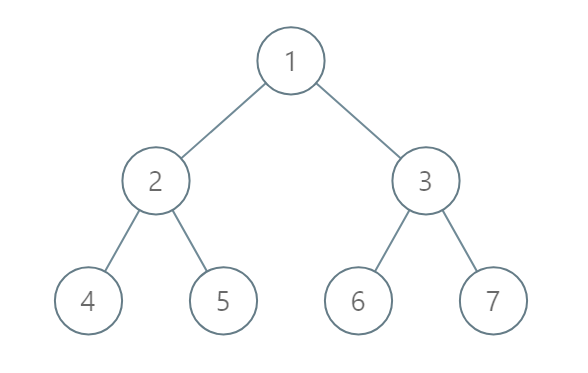
Input: [1,2,3,4,5,6,7]Output: [[4],[2],[1,5,6],[3],[7]]Explanation:The node with value 5 and the node with value 6 have the same position according to the given scheme.However, in the report "[1,5,6]", the node value of 5 comes first since 5 is smaller than 6.Note:
- The tree will have between
1and1000nodes. - Each node’s value will be between
0and1000.
一个二叉树从左到右竖着看,每列的结果放到一起,那么结果是什么样的。
规定:一个节点水平方向的位置是X,竖直方向的高度是Y,其坐标是(X, Y)。那么其左右孩子的坐标分别是(X-1, Y-1) and (X+1, Y-1).
即要求把相同X的节点位置放在一起,并且要求结果中节点的存放是从上到下的。如果两个节点的坐标相同,那么value小的节点排列在前面。
最直白的方法就是把每个节点的位置给求出来,然后构建出题目要求的排列方式。为了方便,我们在求的过程中就把相同X值的放到一起,同时保存Y坐标和值。
所以定义了一个Map,这个Map的结构是map<int, vector<pair<int, int>>>,保存的是x ==> (-y, value)的映射。所以在进行DFS的过程中,我们会给每个坐标都记录下其坐标(X,Y),然后我们根据其坐标把相同X的都放到一起。为什么使用-y呢?这是因为题目中告诉我们节点的Y坐标更小,而题目要求的Y排序是顺序是从上到下的。如果设置根节点层的Y坐标是0的话,那么下面各层的真实Y值应该是-1,-2,-3……,我们的sort函数默认是递增排序的,所以为了sort方便,放到vector中的是-y。
在求出相同X的所有(-y, value)对之后,我们进行了排序使得Y值是严格递增的,当Y值相同时按照value值进行排序。然后把排序好了的节点的value值都取出来放到结果里即可。
一个不引起注意的点是,nodeMap一定要使用map数据结构,而不是unordered_map。因为map会保证有序的,也就是说对nodeMap遍历的时候,X是已经排序好了。而unordered_map是无序结构,遍历不会保证X是有序,增加了麻烦。
另外一个C++的知识点是当使用 for (auto nm : nodeMap)的时候,nm不是一个指针,而是一个复制了的对象,所以不要使用nm->second,而应该使用nm.second.
时间复杂度是O(N + N*(N*log(N) + N))。第一个N是DFS要把每个节点进行遍历一次;for循环有层N,循环里面有层排序是NlogN,遍历是N)。
空间复杂度是O(N)。
C++代码如下:
/** * Definition for a binary tree node. * struct TreeNode { * int val; * TreeNode *left; * TreeNode *right; * TreeNode(int x) : val(x), left(NULL), right(NULL) {} * }; */class Solution {public: vector<vector<int>> verticalTraversal(TreeNode* root) { nodeMap.clear(); dfs(root, 0, 0); vector<vector<int>> res; for (auto nm : nodeMap) { sort(nm.second.begin(), nm.second.end()); vector<int> cols; for (auto p : nm.second) cols.push_back(p.second); res.push_back(cols); } return res; }private: map<int, vector<pair<int, int>>> nodeMap; // x ==> (-y, value) void dfs(TreeNode* root, int x, int y) { if (!root) return; nodeMap[x].emplace_back(-y, root->val); dfs(root->left, x - 1, y - 1); dfs(root->right, x + 1, y - 1); }};下面的python代码没有使用字典,而是使用了list保存了(x, -y, value)三元组的方式,可以直接使用sort进行排序。这样带来的麻烦是需要使用比较前后两个相邻的三元组对应的x值是否相等来判断是否放到同一个列的list中,代码如下:
# Definition for a binary tree node.# class TreeNode(object):#     def __init__(self, x):#         self.val = x#         self.left = None#         self.right = None
class Solution(object):    def verticalTraversal(self, root):        """        :type root: TreeNode        :rtype: List[List[int]]        """        self.m_ = list()        self.dfs(root, 0, 0)        self.m_.sort()        res = [[self.m_[0][2]]]        for i in range(1, len(self.m_)):            if self.m_[i][0] == self.m_[i - 1][0]:                res[-1].append(self.m_[i][2])            else:                res.append([self.m_[i][2]])        return res
def dfs(self, root, x, y): if not root: return self.m_.append((x, -y, root.val)) self.dfs(root.left, x - 1, y - 1) self.dfs(root.right, x + 1, y - 1)这个题同样也可以使用BFS来解决,通过维护一个队列,我们从上到下依次遍历每个节点,给每个节点设置好了坐标。这个队列存储的是个三元组(TreeNode*,int x,int y)做法和DFS的方法极其类似,就不再详细讲了。
/** * Definition for a binary tree node. * struct TreeNode { * int val; * TreeNode *left; * TreeNode *right; * TreeNode(int x) : val(x), left(NULL), right(NULL) {} * }; */class Solution {public: vector<vector<int>> verticalTraversal(TreeNode* root) { queue<pair<TreeNode*, pair<int, int>>> q; // node, x, y q.push(make_pair(root, make_pair(0, 0))); map<int, vector<pair<int, int>>> nodeMap; while (!q.empty()) { auto d = q.front(); q.pop(); TreeNode* curNode = d.first; int x = d.second.first; int y = d.second.second; nodeMap[x].emplace_back(-y, curNode->val); if (curNode->left) q.push(make_pair(curNode->left, make_pair(x - 1, y - 1))); if (curNode->right) q.push(make_pair(curNode->right, make_pair(x + 1, y - 1))); } vector<vector<int>> res; for (auto nm : nodeMap) { sort(nm.second.begin(), nm.second.end()); vector<int> cols; for (auto p : nm.second) cols.push_back(p.second); res.push_back(cols); } return res; }};python版本的BFS如下,同样是先把所有的节点遍历一遍并保存每个节点的位置,然后根据位置再排序遍历求解的方式做到的。
# Definition for a binary tree node.# class TreeNode(object):#     def __init__(self, x):#         self.val = x#         self.left = None#         self.right = None
class Solution(object): def verticalTraversal(self, root): """ :type root: TreeNode :rtype: List[List[int]] """ q = collections.deque() q.append((root, 0, 0)) m_ = list() while q: node, x, y = q.popleft() m_.append((x, -y, node.val)) if node.left: q.append((node.left, x - 1, y - 1)) if node.right: q.append((node.right, x + 1, y - 1)) m_.sort() res = [[m_[0][2]]] for i in range(1, len(m_)): if m_[i][0] == m_[i - 1][0]: res[-1].append(m_[i][2]) else: res.append([m_[i][2]]) return res2019 年 2 月 20 日 —— 少刷知乎多做题
评论与交流